

Established Companies. Verifiable Records. Compliant, Ready for Business.

Colorado Shelf Company

Business Credit Blog

5 Business Credit Cards With No Personal Guarantee for Startups

The main business credit cards with no personal guarantee and no personal credit check are corporate cards such as Brex, Ramp, BILL Divvy, Torpago and the SVB Innovator Card. Instead of the founder's credit score, they weigh the company's bank balance, cash flow or funding.

Reviewed October 21, 2026 • Educational guide, not financial advice

Corporate business card on a laptop showing a company bank balance

No personal guarantee usually means cash in the bank is required.

Most are charge cards paid in full each cycle.

Business-bureau reporting varies — ask the issuer.

How We Compared Them

What Matters When You Have No Personal Credit to Lean On

We compared each card on personal liability, whether a personal credit inquiry is part of the standard application, what the issuer underwrites instead, startup eligibility, repayment structure, expense tools and business-bureau reporting. Terms change often, so treat this as a starting point and confirm on each issuer's current application.

The Shortlist

No Personal Guarantee Business Cards at a Glance

CardTypeWhat issuers weigh
Brex CardCorporate charge cardBusiness cash balance, spending patterns and funding history.
Ramp Corporate CardCorporate charge cardBusiness bank balances, cash flow and company financials.
BILL Divvy CardCorporate card with credit lineBusiness bank data and financial health; some applications may involve a credit review.
Torpago Corporate CardCorporate cardLinked business bank account activity and cash position.
SVB Innovator CardBank-issued business cardBusiness banking relationship and company financials.
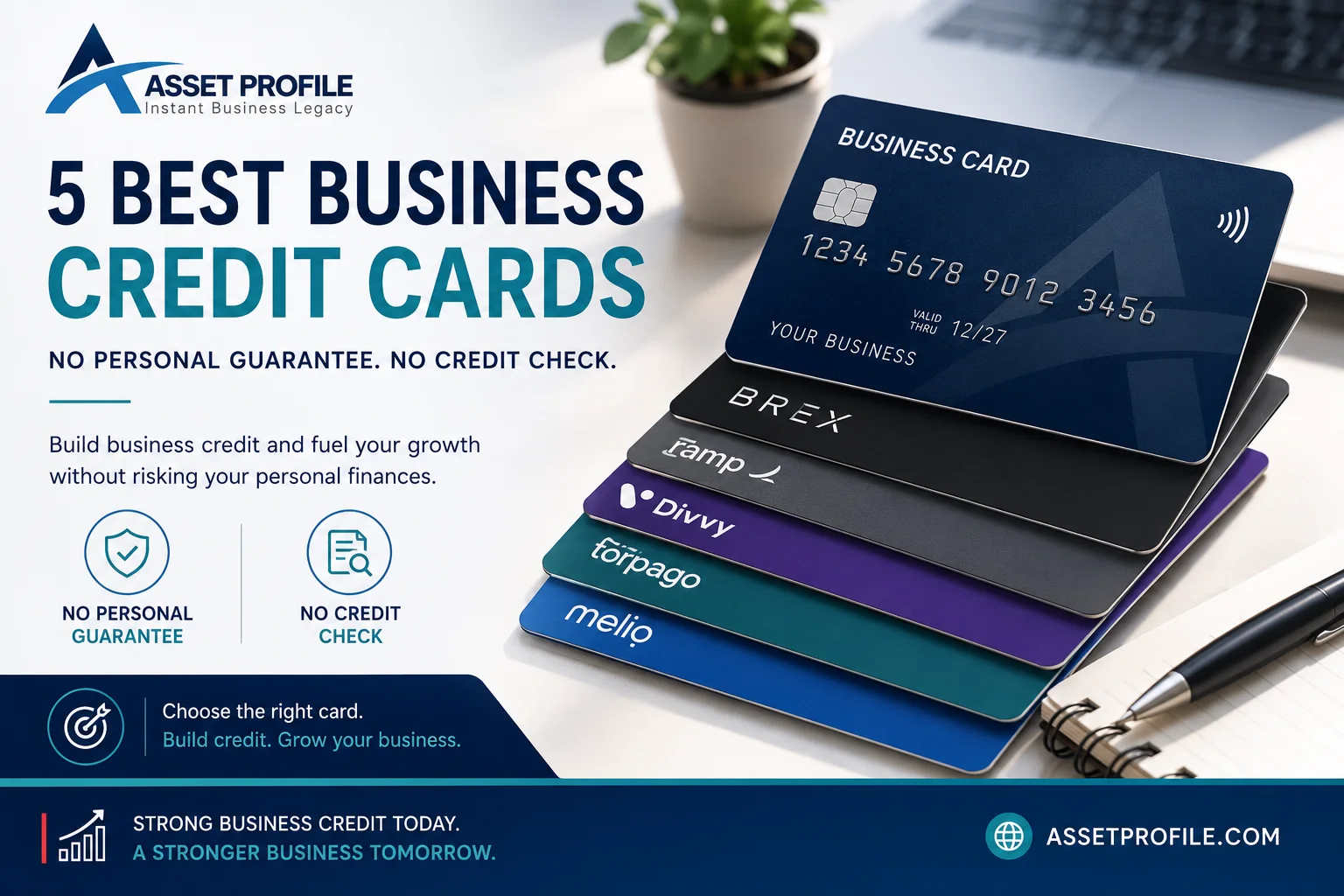
Business credit cards for startups with no personal guarantee, from AssetProfile
From AssetProfile's no personal guarantee card guide. Card line-ups and terms change — confirm with each issuer.

01

Brex Card

Best for: Funded startups and growing companies with healthy bank balances.

Pros

  • No personal guarantee for eligible businesses
  • No personal credit check on the standard application
  • Built-in expense management and spend controls

Watch-outs

  • Usually expects meaningful cash in a business bank account
  • Charge-card structure: balances are typically paid in full on a set schedule
  • Eligibility rules change; confirm current requirements
Check current terms

02

Ramp Corporate Card

Best for: Incorporated businesses wanting strong spend controls and accounting automation.

Pros

  • No personal guarantee or personal credit check
  • Flat cashback structure
  • Receipt capture, budgets and accounting integrations

Watch-outs

  • Requires an incorporated entity and minimum cash in a US business account
  • Not designed for sole proprietors
  • Balances generally paid in full
Check current terms

03

BILL Divvy Card

Best for: Teams that want budgets per department and free spend-management software.

Pros

  • Credit line tied to business performance
  • Rewards can increase with faster repayment
  • Integrated with BILL accounts payable tools

Watch-outs

  • Personal guarantee or credit review may apply in some cases — confirm in your application
  • Rewards depend on repayment frequency
  • Line size depends on verified business data
Check current terms

04

Torpago Corporate Card

Best for: Small businesses wanting a simple corporate card with expense tools.

Pros

  • Positions itself as requiring no personal guarantee
  • Expense management included
  • Limits based on business finances

Watch-outs

  • Smaller, newer issuer — review terms and support carefully
  • Business bank history still matters
  • Features and availability may change
Check current terms

05

SVB Innovator Card

Best for: Venture-backed companies banking with Silicon Valley Bank, now a division of First Citizens Bank.

Pros

  • Bank-issued card tied to an existing banking relationship
  • Underwriting focused on the company, not the founder
  • Suited to startups with institutional funding

Watch-outs

  • Typically requires an SVB business banking relationship
  • Aimed at venture-backed companies
  • Terms set by First Citizens; confirm current availability
Check current terms

For Contrast

Business Cards That Usually Do Require a Personal Guarantee

Most small-business cards from major banks

Cards from issuers such as American Express, Chase, Capital One and regional banks commonly require the owner to sign a personal guarantee and may check personal credit.

Retail and warehouse-club business cards

Store-branded business cards are often easier to obtain, but the application usually still involves the owner's personal credit.

Secured business cards

A cash deposit secures the line. These can help start a payment history, but personal liability terms still vary by issuer.

Fundability

How to Qualify Without Using Personal Credit

  1. 1

    Form and document the entity

    Keep the LLC or corporation in good standing, with an EIN and records that match across state filings, bank and applications.

  2. 2

    Open a business bank account

    Corporate card issuers mainly underwrite from business cash balances and bank activity, so a funded, well-run account matters most.

  3. 3

    Build consistent cash flow

    Steady deposits and balances help support approval and the size of the limit.

  4. 4

    Confirm guarantee and reporting terms

    Read the cardholder agreement for personal liability and ask which business bureaus, if any, receive payment data.

  5. 5

    Pay on time, every cycle

    Charge cards are usually paid in full. Late payment can lower limits or close the account.

Where a shelf company fits

Some lenders consider time in business, so an established entity can matter for certain applications. Corporate card issuers, however, mostly weigh current bank balances and cash flow. An earlier formation date never guarantees approval.

Common Questions

No Personal Guarantee Business Cards: FAQs

Yes, some corporate cards do not require a personal guarantee. They generally rely on the company's bank balance, cash flow or funding instead, so an unfunded new business may not qualify.

Several corporate card issuers state they do not check the owner's personal credit for standard applications. Requirements vary and can change, so confirm in the current application terms.

Most are charge cards that must be paid in full each cycle, and many require minimum cash balances or an incorporated entity. Rewards and features differ from traditional cards.

It depends on whether the issuer reports payment activity to business credit bureaus. Ask the issuer directly before relying on a card for credit building.

An older formation date may help with lenders that consider time in business, but corporate card issuers mostly weigh current bank balances and cash flow. Company age alone does not guarantee approval.

Corporate cards are usually underwritten on the company's finances with liability on the business. Small-business cards are typically underwritten partly on the owner's personal credit with a personal guarantee.

Add-On: Aged Domains

Pair Your Aged Company With an Aged Domain

A domain registered 5+ years with real activity helps your company's online presence match its formation date during bank, vendor and lender reviews. It supports verification; it never guarantees approval.